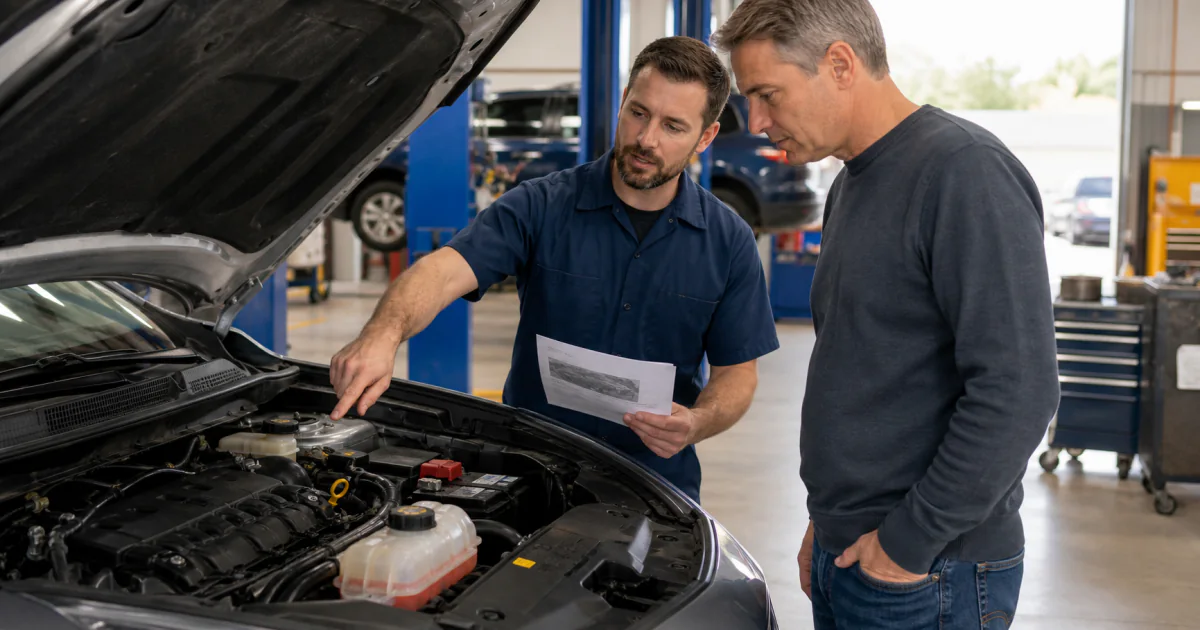
A head gasket seals the joint between the engine block and cylinder head, keeping combustion pressure, coolant, and oil in their intended passages. When a shop suspects failure, the estimate can expand from a gasket repair to cylinder-head machining, cooling-system work, or even engine replacement. That makes a precise diagnosis and a controlled authorization process essential.
Start by separating the possible coverage documents. The Federal Trade Commission explains that a manufacturer warranty comes with the vehicle, while an optional auto service contract—often marketed as an “extended warranty”—is a separately purchased product. Their covered parts, exclusions, time and mileage limits, maintenance requirements, and claim procedures can differ.
1. Confirm the failure instead of treating symptoms as proof
Overheating, white exhaust vapor, unexplained coolant loss, bubbles in the reservoir, contaminated oil, a misfire, or low compression can support a head-gasket investigation, but no single symptom proves the gasket failed. A coolant leak may come from a hose, radiator, water pump, thermostat housing, heater core, intake gasket, cylinder head, or another source. Exhaust vapor may also be normal condensation under some conditions.
Ask the technician to document the tests and the failed area. Depending on the vehicle and symptoms, that record may include a cooling-system pressure test, combustion-gas test, cylinder leak-down or compression results, scan data, spark-plug inspection, borescope images, and evidence of external leakage. The useful question is not just “Is the gasket bad?” but “What evidence identifies the failed part, and what failed first?”
2. Identify the first cause before discussing coverage
The first cause can change the coverage analysis. A gasket may lose its seal because of a defect or eligible mechanical breakdown. It may also be damaged after severe overheating caused by coolant loss, a failed fan, an ignored warning, corrosion, improper prior work, or another condition. A warped or cracked cylinder head may be the result of the same event rather than the initial failure.
Have the repair order separate the head gasket, cylinder head, fasteners, timing components disturbed during access, seals, fluids, machining, and any broader engine damage. If a different component started the sequence, compare that component and consequential-damage language with the applicable warranty or contract. The payer for the first failed part and the payer for resulting damage are not automatically the same.
3. Check every possible coverage path for the exact vehicle
Review the factory warranty booklet for the model year, the vehicle’s original in-service date, current mileage, owner-transfer rules, and the specific engine-parts language. Then search the VIN in the manufacturer owner portal and ask an authorized dealer to check for warranty extensions, customer-support programs, and campaigns. Use NHTSA’s VIN recall lookup for open safety recalls, but remember that a warranty extension, service campaign, technical bulletin, and safety recall are different programs.
A manufacturer letter filed with NHTSA shows why the exact-VIN check matters. Kia extended certain New Vehicle Limited Warranty coverage for specified 2016–2017 Sorento vehicles with 3.3-liter V6 engines and described diagnosis and repair conditions for coolant leakage from the cylinder-head-gasket area. The official owner letter is evidence for vehicles that fit that program’s terms; it is not a general promise for every Kia, every model year, or every head-gasket failure.
4. Map the diagnosis to the actual service contract
If a vehicle service contract may apply, read the complete contract—not a brochure or plan nickname. Search for cylinder head, head gasket, internal lubricated engine parts, seals and gaskets, cooling system, overheating, consequential damage, pre-existing conditions, maintenance, teardown, labor rates, replacement parts, limits, deductible, and prior authorization. Some contracts list covered parts; others define coverage by exclusions. The selected contract controls.
The Consumer Financial Protection Bureau distinguishes manufacturer warranties from optional extended-warranty or service-contract products and advises reviewing costs, coverage, exclusions, length, and vehicle use. A provider may need the administrator—not the selling dealer or repair shop—to decide whether the diagnosed breakdown fits the contract.
5. Protect the claim before teardown or repair begins
Head-gasket diagnosis can require significant disassembly. Before approving it, ask who pays for testing, teardown, reassembly, machining, fluids, and storage if coverage is approved, partly approved, or denied. Have the repair facility contact the administrator before teardown or parts replacement when the contract requires it. Review our diagnostic and teardown fee guide before authorizing work that could remain owner-pay.
Get the scope and authorization in writing. California’s Bureau of Automotive Repair explains in its consumer repair guidance that teardown may carry a charge and that customers authorize repairs before work begins; rules vary by state, but the practical habit travels well. Keep the estimate, testing results, photos, claim number, authorization, inspection notes, and every revised estimate together.
6. Use maintenance records as evidence, not as a substitute for diagnosis
Cooling-system and engine-oil records can help establish vehicle condition and compliance with written obligations. Gather dated invoices for coolant service, oil changes, overheating complaints, thermostat or water-pump work, and earlier engine repairs. Also preserve towing records and photographs of warning messages, leaks, coolant level, or contaminated fluids when it is safe to do so.
Do not assume a missing receipt automatically proves neglect—or that a complete folder automatically guarantees payment. Ask the decision-maker to connect the documented failure and first cause to a specific contract or warranty clause. If a claim is declined, request the reason and evidence in writing, then use our claim-denial review framework to check whether the diagnosis, exclusion, maintenance issue, or authorization record is actually supported.
A six-path decision aid for head-gasket costs
Work through possible payers in order: active manufacturer warranty; certified-used warranty; VIN-specific recall, campaign, or warranty extension; separately purchased vehicle service contract; warranty on an earlier repair; and owner payment. Do not combine them into one vague “warranty” question. Each path has a different issuer, document, eligibility test, remedy, and authorization process.
If no coverage path applies, use the documented diagnosis to compare like-for-like repair estimates. Confirm whether each quote includes head inspection, pressure testing or machining where needed, new fasteners when specified, related gaskets, fluids, timing work disturbed by access, and a written repair warranty. For related decisions, see our guides to water-pump coverage and engine-replacement coverage.
Head-gasket coverage checklist
- Record the VIN, mileage, warning lights, temperature reading, symptoms, and when the problem began.
- Stop driving and arrange a tow when overheating or the owner manual’s warning requires it.
- Get the failed part, diagnostic tests, and first cause in writing.
- Check the model-year factory and certified-used warranty documents that apply to the vehicle.
- Search the VIN for recalls, campaigns, customer programs, and warranty extensions.
- Read the service contract’s covered-parts language, definitions, exclusions, maintenance duties, limits, deductible, and authorization clause.
- Gather coolant and oil service records, earlier repair invoices, photos, scan data, and the itemized estimate.
- Separate gasket work, cylinder-head work, machining, fluids, teardown, and consequential engine damage.
- Obtain every required approval before teardown, replacement, or additional work.
How DriveOn fits
DriveOn is a vehicle service contract, not a manufacturer warranty. It is designed to help with eligible mechanical and electrical breakdowns under the selected contract. Whether a head-gasket repair qualifies depends on the actual contract terms, covered components, exclusions, vehicle eligibility, failure cause, pre-existing-condition rules, maintenance obligations where relevant, limits, deductible, authorization, and claim circumstances. No head-gasket or engine repair is automatically promised. Review the DriveOn claims process, coverage boundaries, and your own contract before work begins; if you are considering protection before symptoms appear, you can check vehicle eligibility.
Bottom line
A head gasket can be covered, but the diagnosis alone does not decide the claim. Confirm the failed part and first cause, check every exact vehicle-specific program and contract, preserve maintenance and diagnostic evidence, and obtain authorization before teardown. The most useful sentence to bring to the shop is: “Please document what failed first, which tests prove it, and which written coverage term applies.”